
+86-21-37782156
info@shzhj.com
_1783308722_WNo_1600d900.webp)
Every year, thousands of contactors fail not because the coil burns out, but because a worn contact kit was never replaced in time. Across factories, water treatment plants, and HVAC systems, this small component quietly determines whether equipment runs reliably or shuts down without warning.
So what does it actually take to choose the right replacement kit? This guide breaks down part-number logic, brand differences, and OEM versus compatible options — the exact details maintenance teams need before placing an order. It's especially useful for:
A contact kit may be small, but choosing the correct one directly affects equipment uptime and safety — read on to find the exact match for your contactor.
Table of Contents
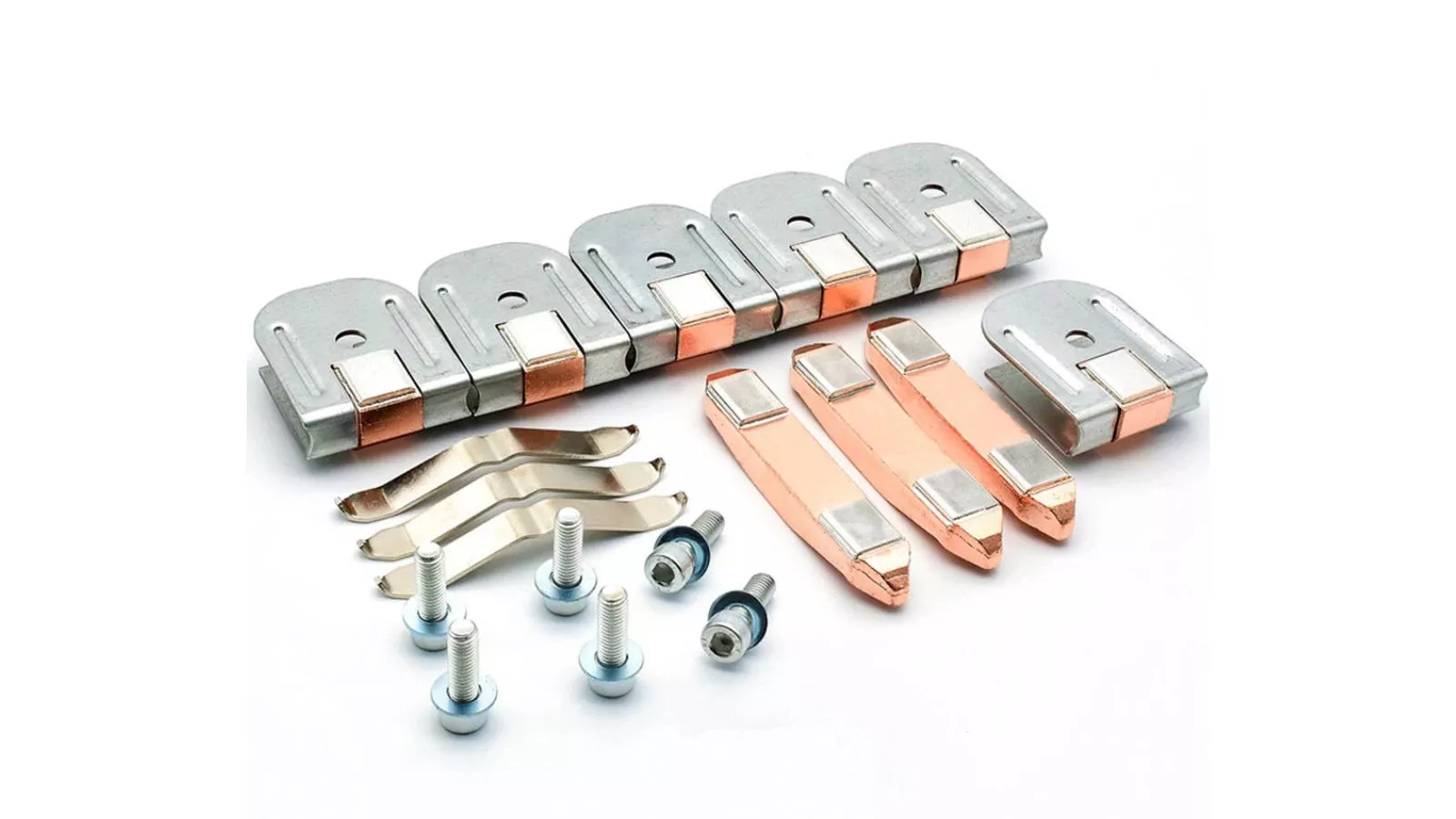
Picture a factory floor at 2 a.m. A conveyor motor stutters. Then stops. The technician pulls the contactor cover. Inside, the copper tips are black. Pitted. Almost welded shut.
That's arcing damage. It happens every time a contactor opens and closes under load. Small sparks jump across the contact surface. Over thousands of cycles, those sparks eat away the metal.
A contact kit is the fix. It's a small replacement set — usually the moving contact, the stationary contact, and sometimes a spring or two. It restores the electrical connection inside the contactor without replacing the whole unit.
Not every kit looks the same, but most share a simple structure.
Moving contact — mounted on the armature, it slides to meet the stationary contact.
Stationary contact — fixed in place, this is where the current actually connects.
Contact spring — keeps pressure steady so the connection doesn't chatter under load.
Simple parts. But when even one wears out, the whole motor circuit can misbehave.
Because most of the contactor is still fine. The coil works. The housing works. Only the contact surfaces take the abuse.
Think of it like brake pads on a car. You don't replace the whole braking system when the pads wear thin. You swap the pads. A contact kit works the same way — it's the wear part, not the whole machine.
That's also why contact kits cost a fraction of a new contactor, and why maintenance teams keep a few on the shelf for their most critical equipment.
Contactors rarely fail without warning. They give small clues first. The trick is catching them early.
Arcing marks — dark, scorched streaks across the contact face.
Pitting — tiny craters where metal has burned away, one spark at a time.
Burnt contacts — a deep black or blue discoloration, sometimes with a metallic smell.
Chattering — a fast, buzzing vibration when the contactor engages.
Nuisance tripping — the circuit trips for no clear reason, again and again.
Any one of these on its own is worth a closer look. Two or more together usually means the kit is already failing.
Here's a scenario worth remembering. A bottling line kept tripping every few hours. No overload, no short circuit. Just random shutdowns. The cause turned out to be pitted contacts, arcing just enough to trip the breaker but not enough to leave obvious damage. A new contact kit solved it in minutes.
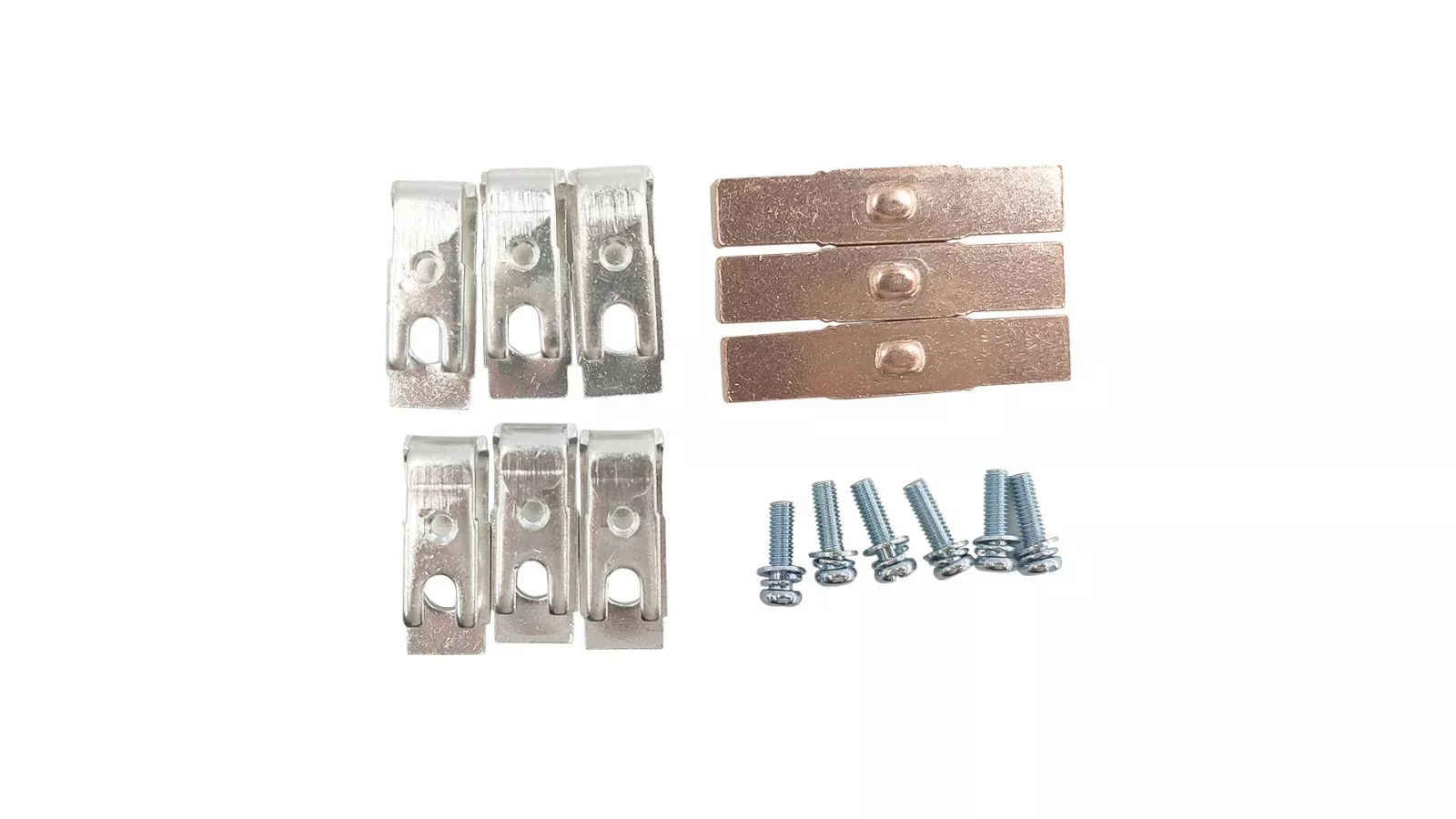
Every contact kit part number tells a story. Once you know how to read it, matching becomes much easier.
Most industrial brands build their part numbers around three pieces of information.
Brand prefix — identifies the manufacturer's numbering system.
Series number — points to the specific contactor family or frame size.
Pole count — tells you how many contact sets the kit includes.
Get any one of these wrong, and the kit simply won't fit — even if it looks nearly identical.
That's why the fastest way to confirm a match isn't guessing from appearance. It's pulling the number stamped on the old contactor, or on the nameplate, and cross-referencing it directly.
With that logic in mind, here's how it plays out across specific brands.
Cutler-Hammer and Eaton share a long manufacturing history, so many of their contact kit numbers carry over between product lines. Searching for a cutler hammer contact kit or an eaton contact kit often leads to the same part, just labeled under a different brand name.
The table below covers some of the most frequently searched numbers, including cutler hammer contact kit 6 45 2, cutler hammer contact kit 6 26 2, and eaton contact kit 6 45 2.
| Part Number | Typical Use | Pole Configuration |
|---|---|---|
| 6 45 2 contact kit | Standard NEMA contactor line | 3-pole |
| 6 26 2 contact kit | Lighter duty motor starters | 3-pole |
| 6 43 6 contact kit | Larger frame contactors | 3-pole |
| 6 27 2 contact kit | Compact starter series | 3-pole |
| 6 288 contact kit | Legacy Cutler-Hammer frames | Varies |
| 75df14 contact kit | Older replacement series | 3-pole |
| 75hf14 contact kit | Heavy-duty replacement series | 3-pole |
| 9998sl4 contact kit | Specialty auxiliary applications | Varies |
Numbers like these often show up on older equipment tags, so it helps to keep this list handy when comparing against a worn kit. Whether the nameplate reads cutler hammer 6 45 2 or cutler hammer 6 43 6, the underlying kit is typically the same part sold under Eaton's current catalog too — a good reason to check both brand names before assuming a number is discontinued.
Allen-Bradley uses its own numbering structure, built around the Bulletin number of the contactor.
Their contactors span several well-known families, from compact IEC-style units to larger NEMA-rated frames. Each family has its own dedicated Allen Bradley contact kit, so the safest match always starts with the Bulletin number on the contactor's data plate.
A quick example: two contactors can look nearly the same size on the shelf, yet use completely different kits because they belong to different Bulletin series. That's why AB technicians rarely rely on visual matching alone.
Step outside Cutler-Hammer, Eaton, and Allen-Bradley, and the naming conventions shift again.
Square D, for instance, uses its own class and type system. The Square D 8536 contact kits line follows this pattern, tied closely to the 8536 contactor series itself. Siemens takes yet another approach — the 3TF49 contactor kit reflects Siemens' European-style numbering, common on 3TF-series contactors used worldwide.
The takeaway is simple. Brand naming isn't universal. A number that looks similar across two brands can represent entirely different hardware.
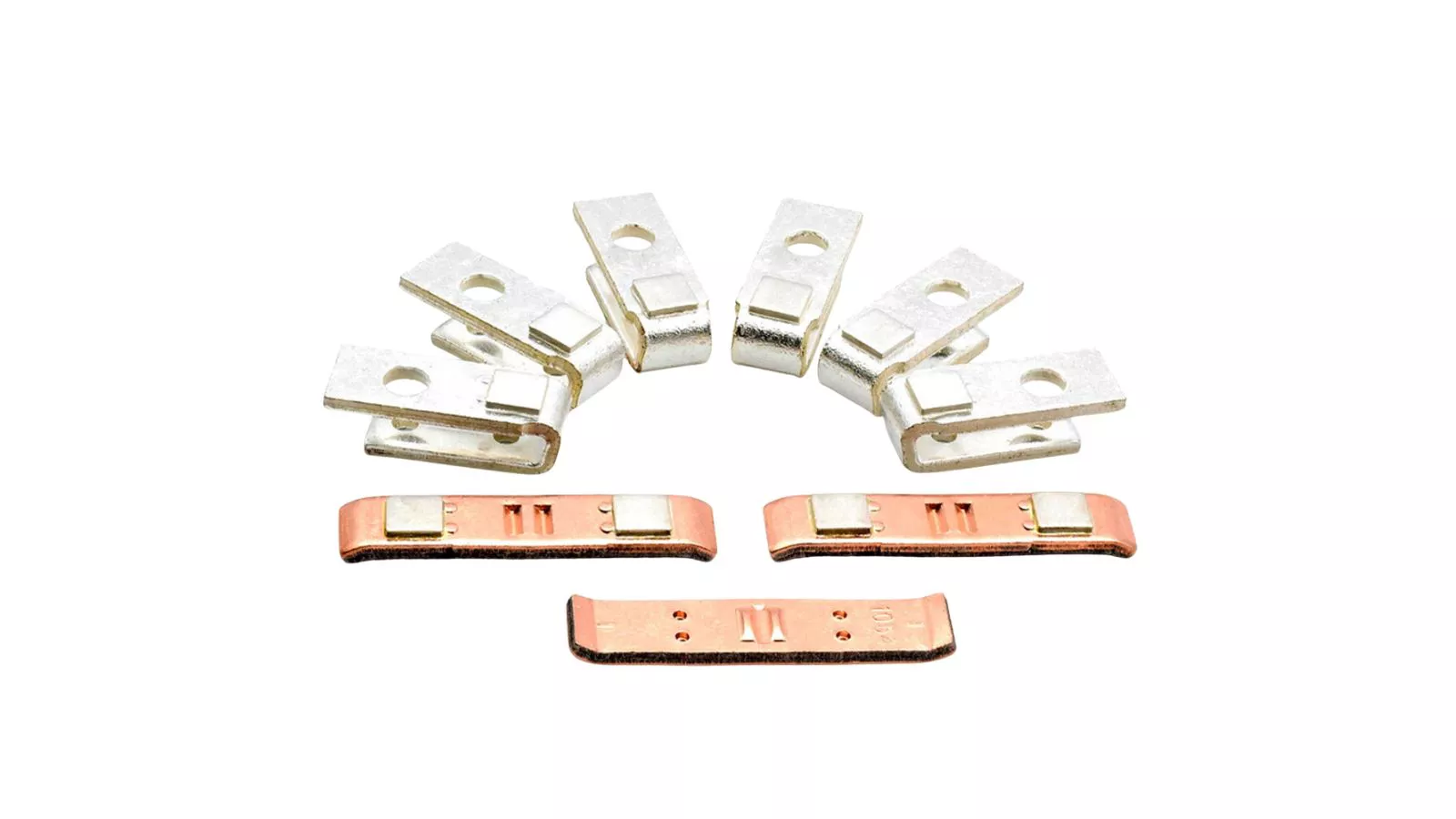
This question comes up in almost every maintenance department. Both options work, but they serve slightly different needs.
| Factor | OEM Kit | Compatible Kit |
|---|---|---|
| Price | Higher | Lower |
| Fit accuracy | Guaranteed | Usually accurate, verify first |
| Lead time | Can be longer | Often faster |
| Best for | Critical, high-cycle equipment | General purpose applications |
Neither option is automatically "better." It depends on how critical the equipment is, and how quickly it needs to be running again.
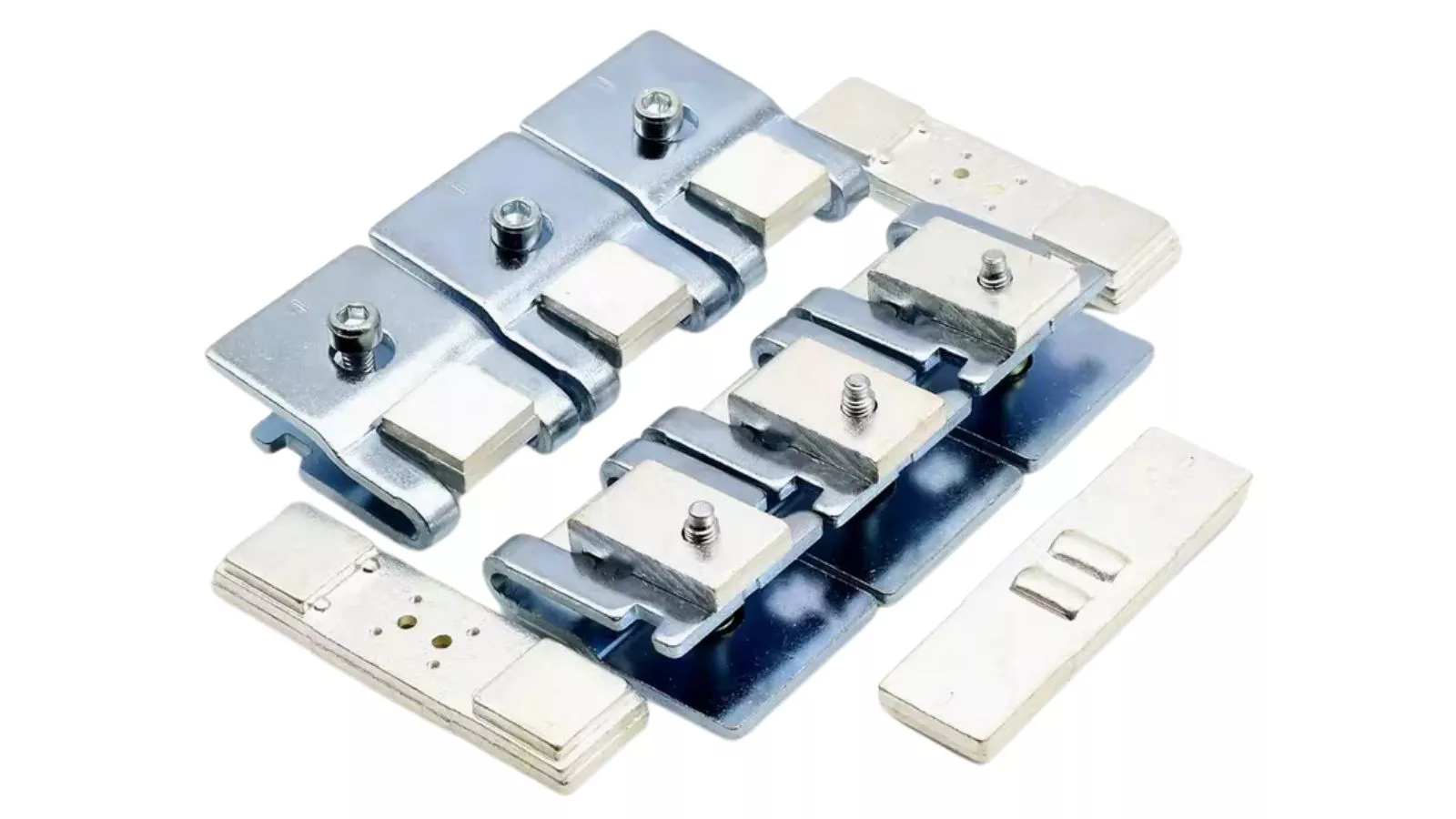
The parts matter, but so does the process around them.
Always isolate power completely, and confirm with a meter — not just the breaker position. Contactors can hold residual charge, and skipping this step is one of the most common causes of injury during simple maintenance.
Forcing a kit that doesn't quite fit, instead of double-checking the part number.
Over-tightening contact springs, which changes pressure and causes early wear.
Skipping a post-installation test cycle before putting the equipment back into service.
None of these mistakes are complicated to avoid. They just require a moment of patience before closing the panel back up.
A wrong order usually costs more than money — it costs downtime. A few habits go a long way toward preventing that.
Confirm pole count before ordering, not after the box arrives.
Match current rating to the original contactor's nameplate specs.
Cross-check OEM numbers against compatible replacements, rather than assuming they're interchangeable.
Buy from a credible seller who can confirm compatibility before shipping.
These four checks take a few extra minutes. They also prevent the far more expensive problem of a second order and a second wait.
It can't be reused once worn. A contact kit is a one-time replacement part — once the contacts show pitting or arcing, the kit needs full replacement, not reinstallation.
Generally, no. Even within the same part number, mixing batches can lead to uneven wear, since spring tension and contact thickness can vary slightly between production runs.
Yes, in most cases. Replacing only one pole while leaving worn contacts on the others creates uneven resistance across the circuit, which shortens the life of the new parts too.
It depends on the manufacturer and the equipment's warranty terms. It's worth checking documentation first, especially on newer or still-covered equipment.
It varies widely based on cycle frequency and load, but many industrial kits last anywhere from one to several years under normal duty conditions.
Finding the correct contact kit isn't about guessing from appearance — it's about matching the brand prefix, series number, and pole count exactly. Get those three details right, and downtime becomes a rare event instead of a routine one.
At SHZHJ, we manufacture a full range of contact kits compatible with Cutler-Hammer, Eaton, Allen-Bradley, Square D, and Siemens contactors, backed by strict quality control and consistent batch performance. As a China-based manufacturer, we supply both OEM-equivalent and cross-reference kits to maintenance teams and distributors worldwide, with competitive lead times and technical support to confirm the right match before you order.
If you're unsure which part number fits your contactor, our team can help verify compatibility before you buy. Reach out to SHZHJ today for a quick quote, and visit lococontact.com to explore our full contact kit catalog.
*We respect your confidentiality and all information are protected.

This article explores the key differences between silver and copper conductors, focusing on resistance, performance, and real-world applications—understanding these factors is essential for making informed decisions.

This guide explains how flexible copper busbars work, how to select the right one, and why your choice directly impacts system reliability.

In the railway and heavy equipment industry, locomotive contacts are small but critical components that make or break electrical circuits inside contactors, relays, and switches.