
+86-21-37782156
info@shzhj.com
Flexible copper busbar manufacturers in India are seeing growing demand as power distribution, renewable energy, EV infrastructure, and industrial electrification require compact, high-current connections. India’s copper demand is expected to grow by around 9% in 2026, supported by infrastructure development, renewable energy, power networks, and other industrial applications.
For buyers, the key question is not simply which supplier offers copper busbars, but which manufacturer can provide the right combination of copper grade, cross-sectional area, flexibility, insulation, plating, current capacity, and customization. Recent demand for renewable energy and storage is also creating more applications where flexible connections help accommodate vibration, thermal expansion, and limited installation space.
This guide examines five flexible copper busbar manufacturers and suppliers serving the Indian market, focusing on their product capabilities, specifications, applications, and customization options—helping buyers make a more informed supplier choice; continue reading to compare the options.
Company Overview:
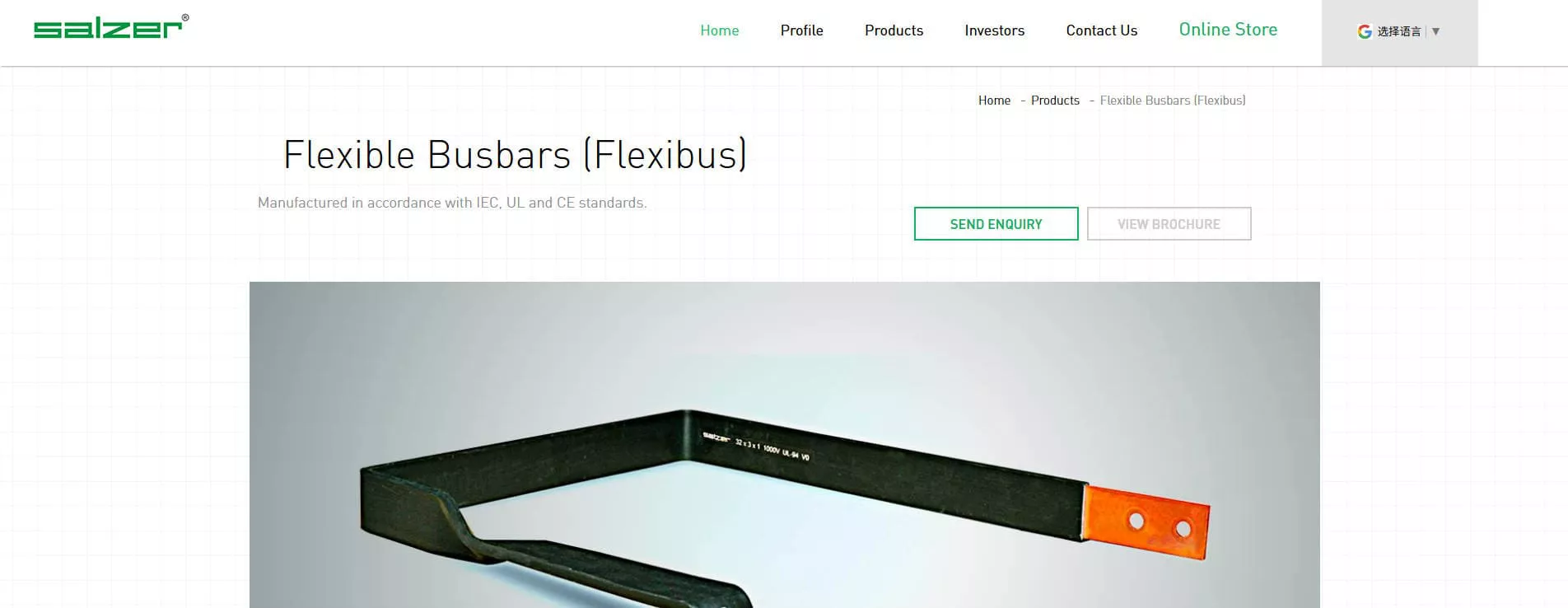
Salzer Electronics provides flexible busbar solutions for electrical power connections where compact, formable conductors are required. Its Flexibus range uses annealed ETP-grade copper and can be supplied in bare or tinned configurations. The flexible construction supports cutting, bending, twisting and hole punching, allowing busbars to be adapted to different equipment layouts. These products are used across switchgear, electrical panels, UPS systems, transformers and renewable energy equipment.
Headquarters: Coimbatore, Tamil Nadu, India
Flexible Busbar Products:
Key Material & Specification Options:
Salzer's flexible busbars use high-purity ETP-grade annealed copper and can be supplied in different configurations depending on electrical and installation requirements. Options such as tinning and insulation are available for different connection and environmental requirements.
Typical Applications: Switchgear, electrical panels, UPS systems, transformers, renewable energy equipment, and industrial electrical connections.
Company Overview:
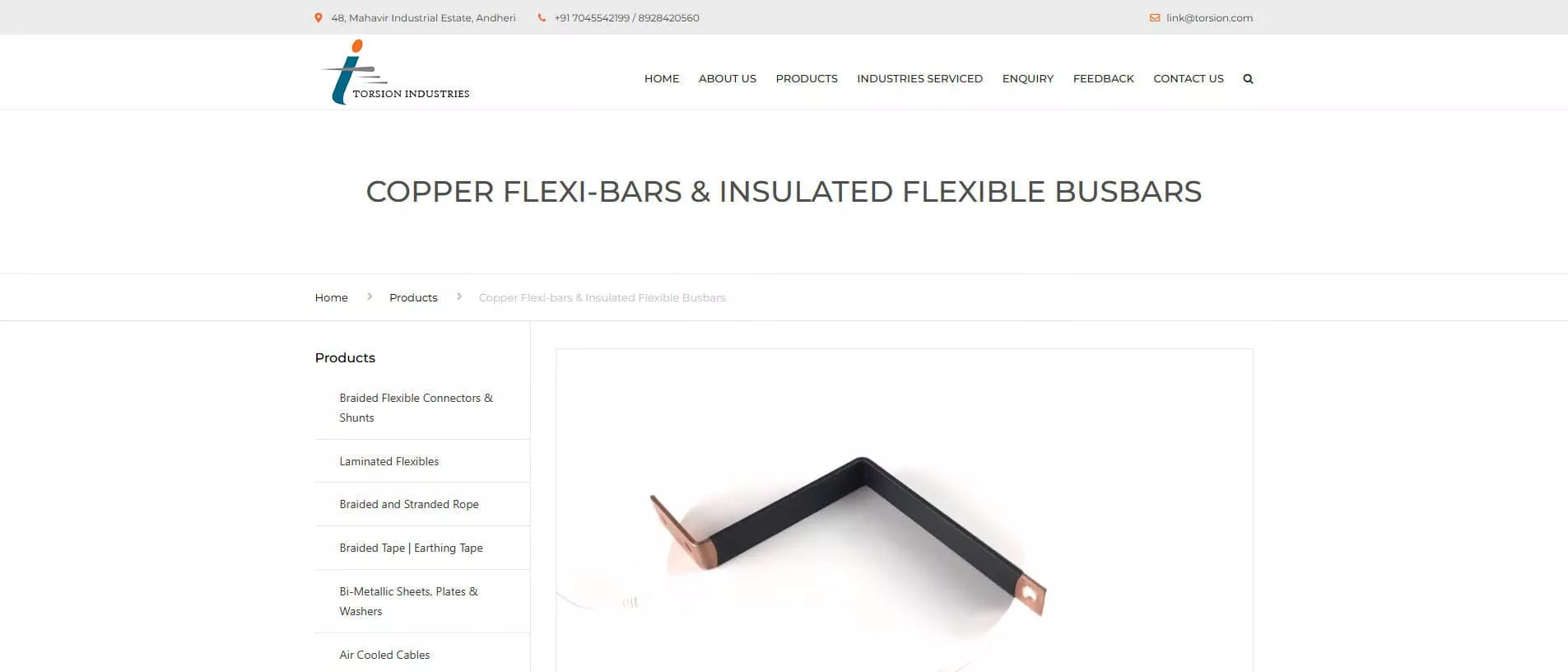
Torsion Industries focuses on flexible copper connection products for power distribution and industrial equipment, including Copper Flexi-bars and insulated flexible busbars. Its laminated construction combines multiple thin copper foils to provide flexibility while maintaining a high-current conductive path. Available options include tin plating and PVC, polyolefin or silicone insulation, with cross-sectional areas ranging from 24 mm² to 1200+ mm². Typical applications include circuit breakers, switchboards, transformers, generators and busway systems.
Headquarters: Mumbai, Maharashtra, India
Flexible Busbar Products:
Key Material & Specification Options:
Torsion manufactures flexible busbars from thin ETP-grade copper foils with a minimum copper content of 99.90%. Its products can be supplied with tin plating and different insulation options, including self-extinguishing PVC, polyolefin and silicone, with cross-sectional areas available from 24 mm² to 1200+ mm².
Typical Applications: Circuit breakers, panel boards, switchboards, transformers, generators, high-voltage power connections, busway systems, and industrial equipment.
Company Overview:
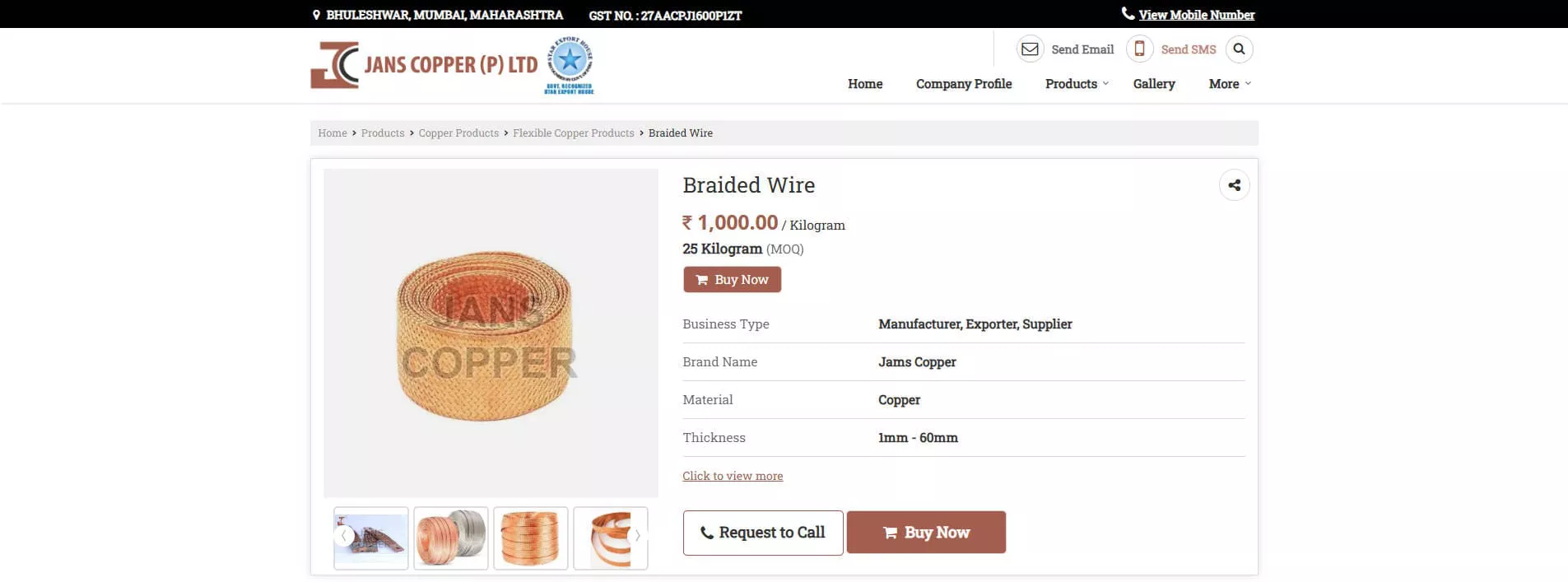
Jans Copper offers a broad range of flexible copper connection products, including braided copper busbars, laminated copper busbars, flexible copper links and connectors. Its products can be manufactured using electrolytic Cu-ETP or oxygen-free copper, with tin and silver plating available for different electrical and environmental requirements. Customized dimensions and configurations allow the products to be integrated into switchgear, transformers, generators, UPS systems, bus ducts and other high-current electrical equipment.
Headquarters: Daman, India
Flexible Busbar Products:
Key Material & Specification Options:
Jans Copper manufactures flexible products using high-conductivity electrolytic-grade copper sheets and foils. Flexible copper busbars are available in different cross-sectional areas and sizes, with customized specifications available according to customer requirements.
Typical Applications: Switchgear, power plants, bus ducts, transformers, cathodic protection systems, and industrial power distribution.

Company Overview:
Bajeria focuses on flexible electrical connection solutions based on laminated and braided copper constructions. Its product range includes laminated flexible shunts, connectors and jumpers, together with braided flexible shunts, connectors and insulated flexible busbars. Different sizes, drilling patterns and connection configurations can be supplied to suit equipment layouts and installation requirements. The products are commonly used in switchgear, power distribution equipment, electrical panels, battery connections and industrial machinery.
Headquarters: Mumbai, Maharashtra, India
Flexible Busbar Products:
Key Material & Specification Options:
Bajeria offers flexible busbars and related connectors in laminated and braided constructions, with different sizes and configurations available for specific electrical connection requirements. Its product range also includes flexible solutions for battery and high-current applications.
Typical Applications: Power distribution systems, switchgear, motor control centers, battery systems, electrical equipment, and high-current connections.
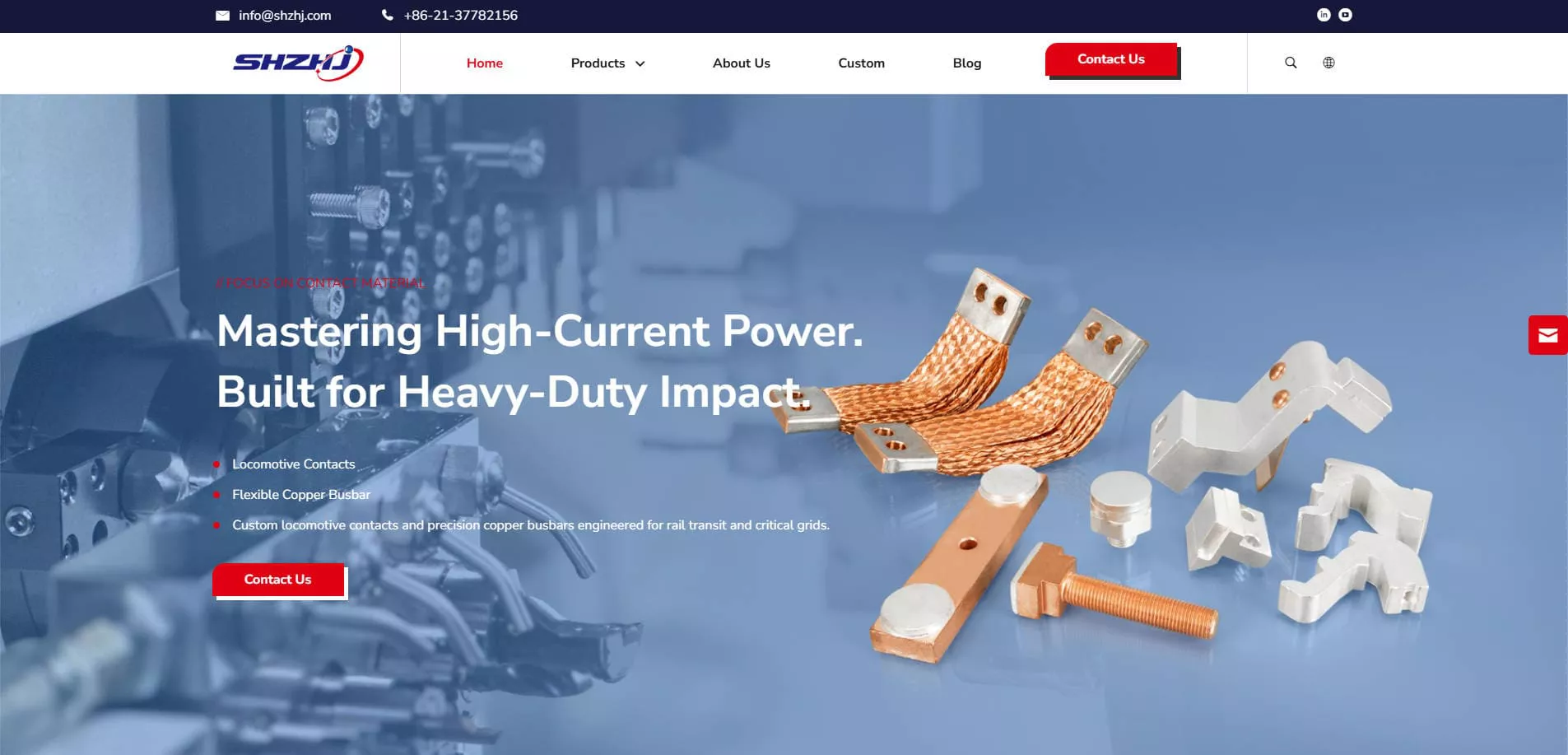
Company Overview:
SHZHJ focuses on customized high-current copper interconnection components, with flexible copper busbars available in laminated, braided and insulated constructions. Its manufacturing process supports drawing- and sample-based customization, including dimensions, terminal geometry, punched holes, plating and insulation. Copper options include Cu-ETP and C11000, while surface treatments can include tin, nickel or silver plating. With flexible configurations for switchgear, transformers, EV batteries, energy storage and industrial power systems, SHZHJ also accepts OEM and custom orders from customers in the Indian market.
Headquarters: Shanghai, China
Flexible Busbar Products:
Key Material & Specification Options:
SHZHJ provides custom copper busbar manufacturing based on customer drawings, samples or technical specifications. Its capabilities include CNC bending and punching, custom tooling, tin, silver and nickel plating, as well as customized insulation using epoxy powder coating, PE/PVC heat-shrink sleeves and high-temperature insulation materials.
Typical Applications: Power distribution, electrical equipment, high-current connections, rail transit, critical electrical systems, and industrial applications.
Flexible copper busbars provide high-current electrical connections where rigid copper bars are difficult to install. Common applications include switchgear, transformers, UPS systems, EV battery packs, energy storage systems, and industrial power equipment.
Laminated busbars use stacked copper foils and are well suited to compact, high-current connections. Braided busbars use fine copper strands and offer greater multi-directional flexibility and vibration resistance, making them useful for moving or vibration-prone equipment.
Provide the copper grade, cross-sectional area, length, width and thickness, current rating, terminal or hole configuration, insulation requirements, surface finish, operating voltage and temperature. A 2D drawing, 3D CAD file or physical sample can make custom quoting more accurate.
Yes. Customization commonly includes dimensions, bend angles, hole patterns, terminal shapes, plating and insulation. For example, SHZHJ accepts 2D/3D drawings or physical samples and provides custom CNC bending, punching, plating and insulation.
ETP copper and C11000 copper are common choices because of their high electrical conductivity. For example, SHZHJ specifies Cu-ETP and C11000 copper with a minimum purity of 99.95% for its flexible busbars.
The decision depends on your required specifications, order volume, customization, lead time, documentation and landed cost. An Indian manufacturer may simplify domestic sourcing, while an overseas factory can be worth comparing when it offers a specialized design, low MOQ or specific manufacturing capability.
Choosing a flexible copper busbar supplier should go beyond comparing company names or quoted prices. Copper grade, cross-sectional area, construction type, current requirements, insulation, surface treatment, terminal configuration and customization capability all affect whether a busbar will perform reliably in its intended application. The right supplier should also be able to work from your technical drawings or samples and provide consistent quality documentation.
If you are comparing Indian manufacturers but also want to evaluate a specialized overseas option, SHZHJ provides factory-direct custom flexible copper busbar manufacturing from China. Its capabilities cover laminated and braided copper busbars, CNC forming and punching, tin, nickel and silver plating, customized insulation, and drawing-based OEM production. SHZHJ supports prototype orders as well as production volumes, making it practical to compare a customized solution alongside local Indian suppliers.
For a project-specific quotation, send your drawing, sample or technical requirements to SHZHJ and request an engineering review. The team can evaluate the required material, dimensions, terminal configuration, surface finish and insulation before preparing a quotation.
*We respect your confidentiality and all information are protected.

This article explores the key differences between silver and copper conductors, focusing on resistance, performance, and real-world applications—understanding these factors is essential for making informed decisions.

This guide explains how flexible copper busbars work, how to select the right one, and why your choice directly impacts system reliability.

In the railway and heavy equipment industry, locomotive contacts are small but critical components that make or break electrical circuits inside contactors, relays, and switches.