
+86-21-37782156
info@shzhj.com
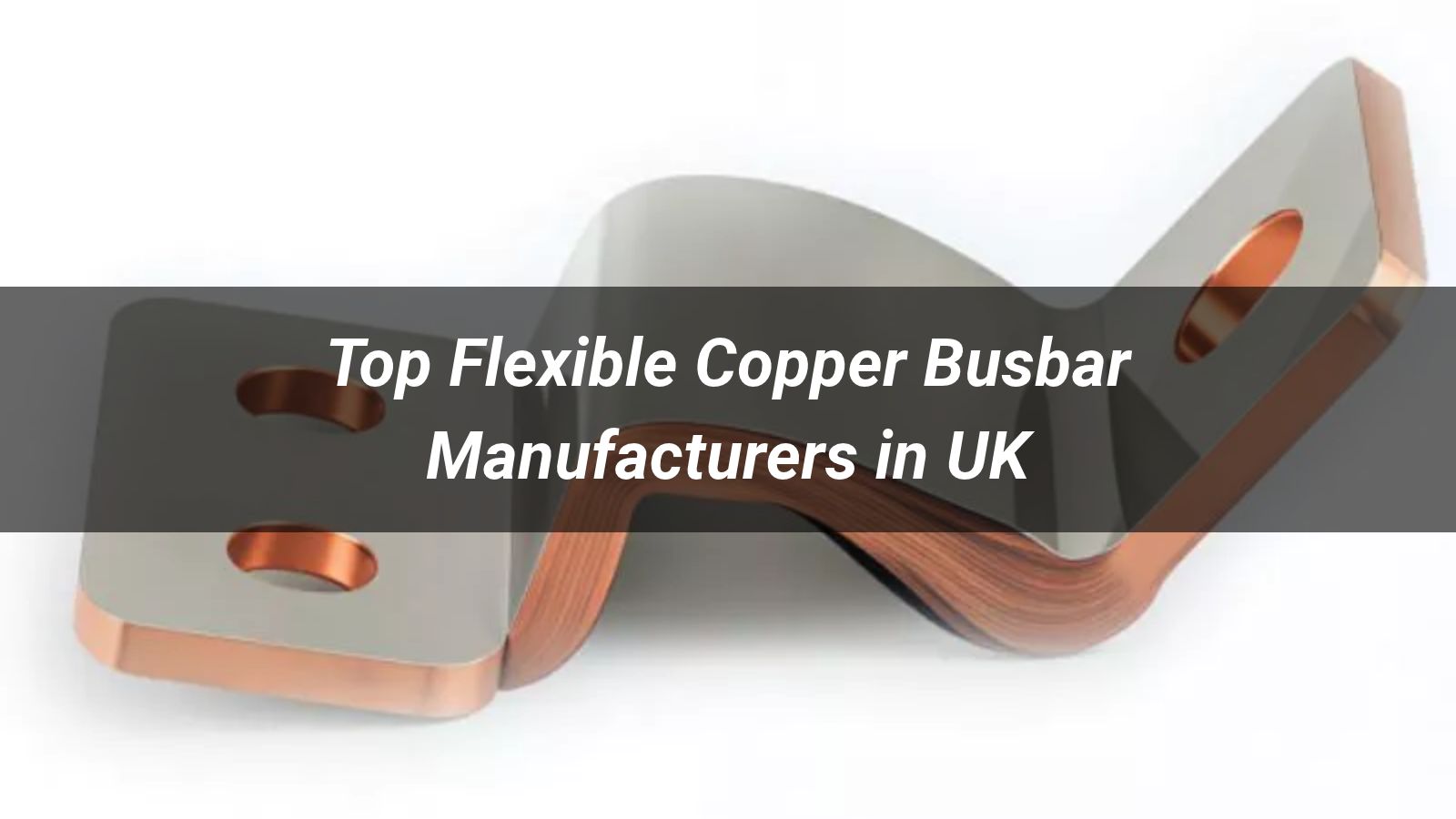
Flexible copper busbar solutions are becoming increasingly important in UK power distribution, switchgear, EV, renewable energy and industrial equipment. UK manufacturers now support everything from prototypes to volume production, with flexible designs helping engineers manage tight spaces, vibration and high-current connections.
So, which companies should UK buyers consider? The key options include established manufacturers such as ILF Products, H V Wooding, Mettex and Tranect, each with different manufacturing and customization capabilities. This guide is particularly useful for:
We examine the manufacturers, specifications and RFQ requirements that matter when sourcing flexible copper busbars, helping you make a more informed choice. Continue reading to see which suppliers match your project requirements and when it makes sense to request a quotation.
Headquarters: Staffordshire, UK
Company Overview:
ILF Products focuses on copper busbars and flexible busbar assemblies for electrical and industrial equipment. Its solutions support high-current connections where installation space is limited or components require some movement.
Flexible Busbar Manufacturing Capabilities:
ILF Products manufactures flexible copper busbars using precision fabrication processes, including cutting, punching, forming, and bending. Its capabilities cover flexible laminated and braided copper busbar solutions designed for applications where movement, vibration, thermal expansion, or limited installation space need to be accommodated. The company can also produce busbar assemblies with different connection configurations for specific electrical equipment.
Customisation Options:
ILF Products supports custom flexible copper busbar manufacturing based on customer drawings and application requirements. Depending on the project, specifications can include conductor dimensions, connection hole patterns, bending and forming requirements, insulation, and other finishing details. This makes its solutions suitable for OEMs, panel builders, electrical equipment manufacturers, and industrial projects requiring application-specific copper busbar assemblies.
Company Overview:
H V Wooding combines busbar engineering with precision metal manufacturing for electrical applications. Its copper and flexible busbar solutions serve power distribution, automotive and industrial equipment where accurate fabrication and dependable connections are required.
Headquarters: Hythe, Kent, CT21 6HG, UK
Flexible Busbar Manufacturing Capabilities:
H V Wooding manufactures flexible busbars using copper conductors and specialised forming processes, with capabilities covering cutting, punching, bending, and other precision fabrication operations. Its flexible busbar solutions are designed to accommodate movement, vibration, and thermal expansion while providing reliable high-current electrical connections.
Customisation Options:
H V Wooding can develop flexible busbar solutions according to specific drawings, dimensions, connection configurations, and application requirements. Its manufacturing capabilities support both prototype development and volume production, making the company suitable for OEMs and electrical equipment manufacturers requiring application-specific busbar assemblies.
Company Overview:
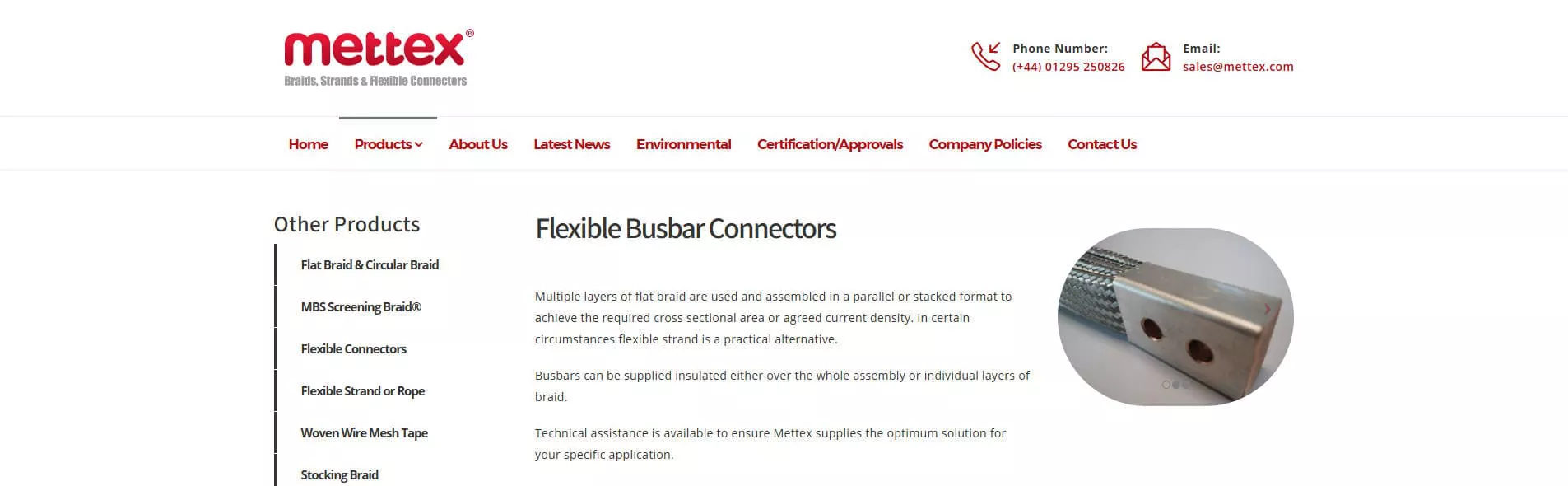
Mettex focuses on flexible electrical connections, including copper braid and flexible busbar assemblies. Its products combine electrical conductivity with flexibility, making them suitable for equipment exposed to vibration or movement.
Headquarters: Banbury, Oxfordshire, OX16 4SP, UK
Flexible Busbar Manufacturing Capabilities:
Mettex produces flexible busbars using multiple layers of flat copper braid and can configure the conductor cross-section to meet different current and installation requirements. Its capabilities include insulated flexible busbar assemblies and copper connections designed for demanding electrical and industrial applications.
Customisation Options:
Mettex offers custom-made flexible busbar solutions manufactured to customer drawings or based on existing components. Options can include conductor dimensions, braid configuration, insulation, plating, termination design, and other assembly requirements, allowing the products to be adapted to specific electrical and mechanical conditions.
Company Overview:
Tranect provides copper busbars and flexible electrical connection solutions for transformers, switchgear, power distribution and industrial equipment. Its engineering capabilities support designs developed around specific electrical and installation requirements.
Headquarters: Liverpool, Merseyside, L20 8JW, UK
Flexible Busbar Manufacturing Capabilities:
Tranect provides flexible laminated copper busbars and braided copper connections for applications requiring high-current electrical connections with mechanical flexibility. Its solutions can be engineered for transformer connections, switchgear, busduct systems, and other equipment where vibration, thermal expansion, or alignment between components needs to be accommodated.
Customisation Options:
Tranect supports custom busbar manufacturing based on project drawings and technical specifications. Flexible busbars can be configured according to conductor dimensions, number of copper layers, connection points, hole patterns, plating, and other application requirements. The company also provides engineering support for prototype and project-specific requirements.
Company Overview:
Copper Braid Products focuses on flexible copper braid and high-current connection solutions for electrical equipment. Its products provide flexible connections where vibration, movement or restricted installation space makes rigid copper links less practical.
Headquarters: UK
Flexible Busbar Manufacturing Capabilities:
Copper Braid Products provides flexible copper braid busbars and connection assemblies for applications including transformers, busduct systems, switchgear, circuit breakers, and other high-current electrical equipment. Its products are designed to provide flexible electrical connections while helping accommodate vibration, movement, and thermal expansion.
Customisation Options:
Copper Braid Products offers flexible copper connection solutions in different dimensions and configurations to suit specific applications. Custom requirements can include braid size, conductor cross-section, connection length, terminal configuration, and other mechanical or electrical specifications, making the products suitable for project-specific power connection requirements.
The UK market includes manufacturers, specialist suppliers and international brands. For buyers, this distinction matters when a project needs a drawing, prototype or short production run.
ILF Products manufactures flexible busbars in the UK using layered copper construction. Its products are designed for applications such as switchboards, transformers, UPS systems and low-voltage power distribution. ILF also offers custom busbar design and production from customer drawings or project briefs.
H V Wooding manufactures copper, aluminium and flexible busbars, with capabilities ranging from prototype work to volume production. Its flexible busbars are designed for applications where vibration resistance and high current capacity are important, including power and EV systems.
Mettex focuses on flexible electrical connections. Its flexible busbar assemblies use multiple layers of flat copper braid and can be manufactured to drawings or existing components.
Tranect manufactures solid and flexible copper busbars for electrical engineering applications. It can work from customer drawings or develop busbars from dimensions and electrical requirements.
The copper grade should be clearly defined in the RFQ. For example, Tranect specifies CW004A copper to BS EN 13600 for its copper busbars.
The construction also matters. A laminated flexible busbar may use thin copper foils, while a braided design uses multiple copper strands or flat braids. The choice affects flexibility, heat dissipation and installation.
UK projects may also specify insulation, plating or protective coatings. Common options include tin, nickel, silver, PVC, heat-shrink and other insulating materials.
The important point is simple: do not specify only “flexible copper busbar”. Include the electrical, mechanical and environmental requirements that the finished part must meet.
| Requirement | Example |
|---|---|
| Conductor material | CW004A / Cu-ETP copper |
| Current rating | 400 A continuous |
| Dimensions | Width, thickness and overall length |
| Connection points | Hole diameter, pitch and terminal arrangement |
| Flexibility | Required bend radius or movement |
| Insulation | PVC, heat-shrink or other specified material |
| Surface finish | Plain, tin-plated, nickel-plated or silver-plated |
| Quantity | Prototype, 50 pieces or annual production volume |
These details give the manufacturer a much clearer picture of the finished part.
A useful example: instead of asking for “a 500 A flexible copper busbar”, provide the current, copper grade, length, connection-hole pattern, insulation, operating temperature and expected movement.
A drawing is even better. If no drawing is available, some UK manufacturers can work from dimensions, sketches or electrical requirements. ILF and Tranect both describe design support based on customer information.
For a first RFQ, the goal is simple: give the manufacturer enough information to understand what the busbar must do, where it must fit and how it will be installed.
Provide the copper material, current rating, dimensions, hole pattern, bend requirements, insulation, plating and quantity. A 2D drawing or 3D CAD file is even better.
Yes. UK manufacturers such as ILF Products and Tranect accept customer drawings and technical requirements for custom busbar production.
Laminated busbars use stacked copper foils and suit compact, high-current connections. Braided busbars offer greater flexibility and are useful where vibration or repeated movement is expected.
No. The choice depends on the connection environment. Tin, nickel or silver plating may be selected for corrosion resistance, contact performance or specific electrical requirements.
Yes. UK buyers can source from overseas manufacturers when the supplier can meet the required drawings, materials, testing, documentation and delivery requirements.
Choosing a flexible copper busbar manufacturer involves more than comparing prices. UK buyers should check the manufacturer’s production capabilities, material specifications and customization options, then provide clear technical information when requesting a quotation.
For projects that are open to overseas sourcing, SHZHJ is a China-based direct manufacturer specializing in customized flexible copper busbars. It offers laminated, braided and insulated designs, with options for CNC forming, punching, plating, insulation and custom terminal configurations. Buyers can submit drawings, CAD files or samples for engineering review.
If you are comparing UK and international suppliers, you can visit SHZHJ to review its flexible copper busbar capabilities and send your project requirements for a quotation.
*We respect your confidentiality and all information are protected.

This article explores the key differences between silver and copper conductors, focusing on resistance, performance, and real-world applications—understanding these factors is essential for making informed decisions.

This guide explains how flexible copper busbars work, how to select the right one, and why your choice directly impacts system reliability.

In the railway and heavy equipment industry, locomotive contacts are small but critical components that make or break electrical circuits inside contactors, relays, and switches.