
+86-21-37782156
info@shzhj.com
_1783995591_WNo_1600d900.webp)
Every high-current electrical system eventually faces the same decision: flexible copper braid or laminated busbar. As power density rises across EVs, energy storage, and industrial automation, this choice increasingly shapes how efficiently — and how reliably — a system performs over its lifetime.
This guide breaks down what matters most: how each conductor is built, how it performs under real current and vibration loads, and which one fits your specific application. It's written for:
At its core, this comparison comes down to structure versus flexibility, and current capacity versus movement — and getting that choice right can mean the difference between a connection that lasts and one that fails early. Keep reading to see which option fits your project.
Table of Contents
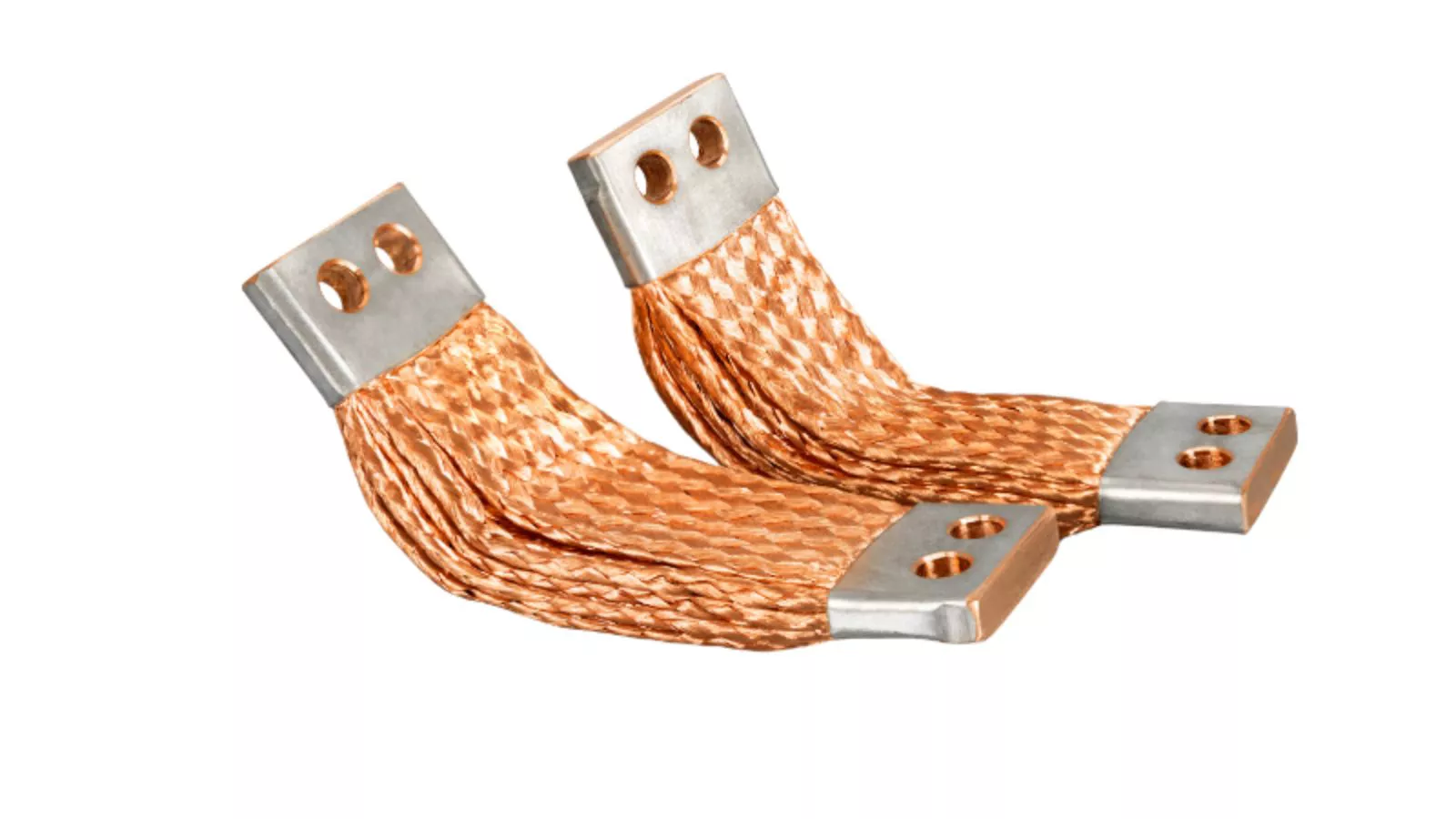
A flexible copper braid is woven from many thin copper wires, like a tightly knit metal rope. This weave lets it bend, twist, and flex without cracking — which is why it's often called a copper flex connector or braided copper connector.
Example: a robotic arm that moves all day. A rigid bar would fatigue and snap. A copper braid just keeps flexing.
Here's a quick look at its typical makeup.
| Feature | Typical Detail |
|---|---|
| Base material | High-purity electrolytic copper |
| Construction | Braided fine wires |
| Common plating | Tin, nickel, or silver |
| Feel | Soft, springy, rope-like |
You'll typically find these flexible electrical copper braided connectors bridging battery terminals, motor housings, and grounding points — anywhere movement or vibration is constant.
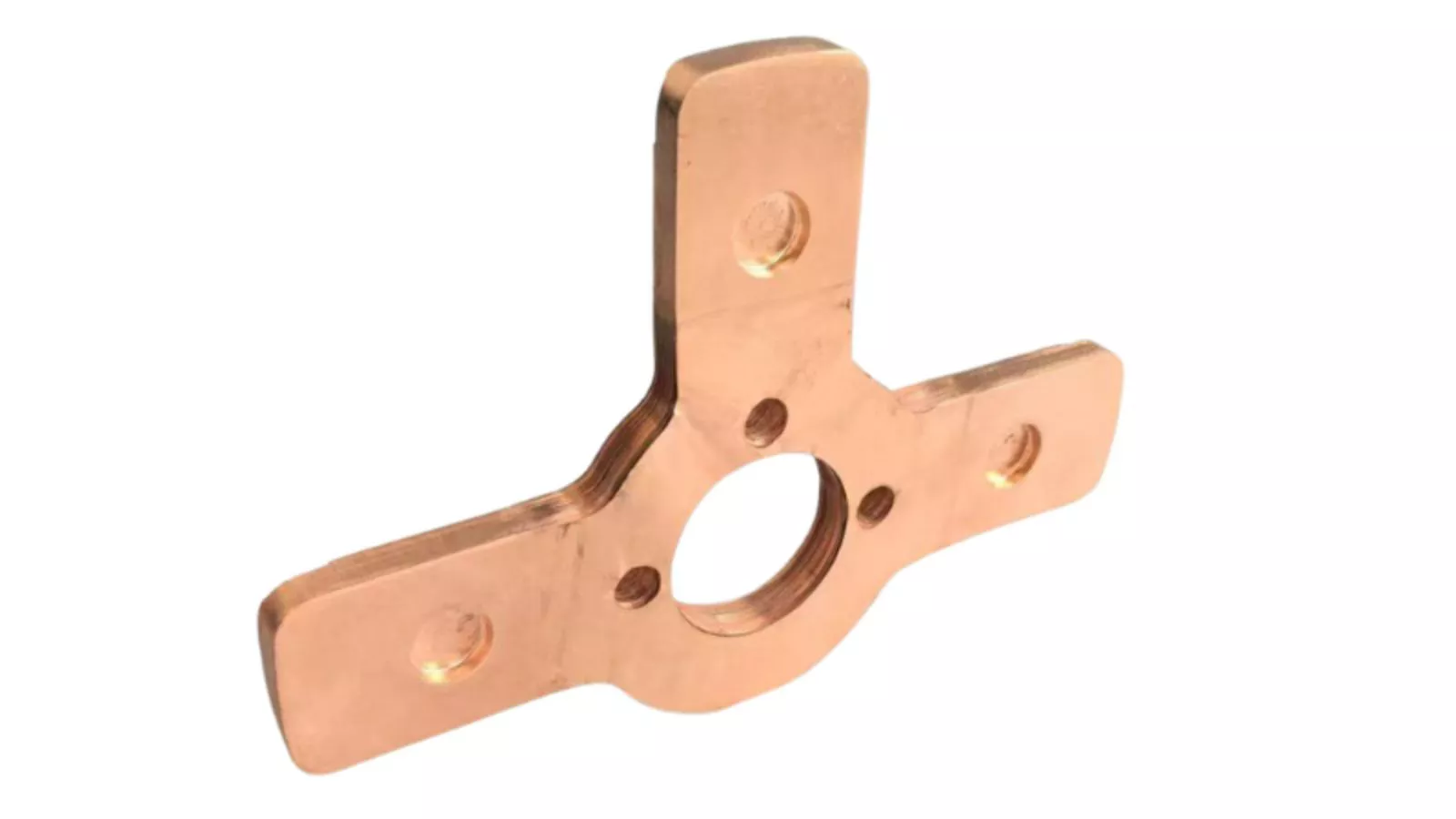
A laminated busbar is built from thin copper layers, stacked and insulated between each sheet. Instead of weaving, it's pressed flat — like layers of foil bonded into one solid strip.
This layered structure keeps inductance low and current flow tight. That's why laminated busbars are common where space is limited but current is high.
Example: inside a compact EV inverter, a laminated busbar links power modules in a few square inches — something a bulky cable bundle couldn't do.
Here's a quick snapshot of its typical build.
| Feature | Typical Detail |
|---|---|
| Base material | Thin copper sheets |
| Construction | Stacked, insulated layers |
| Common insulation | Polyester or epoxy film |
| Feel | Flat, firm, compact |
That flat, layered build is also what separates it structurally from a braid — which brings us to the next comparison.
Pick up a copper braid and a laminated busbar side by side, and the difference is obvious before you even read a spec sheet. One feels like a rope. The other feels like a ruler.
A braid starts as hundreds of thin copper wires. Machines weave them into a tight, tubular mesh, then flatten and crimp the ends onto terminals. The result holds its shape loosely — squeeze it, and it gives.
A laminated busbar starts differently. Thin copper sheets, often 0.1mm to 0.3mm each, are stamped into shape, layered on top of one another, and bonded with a thin insulating film between layers. Squeeze it, and it barely moves — the layers are already locked together.
Example: think of a phone charging cable versus a stack of credit cards taped together. Both are flexible in theory, but the cable coils freely while the card stack only bends along one axis. That's the practical difference between a braid and a laminate.
The manufacturing steps reflect that same split, which is worth seeing side by side.
| Aspect | Flexible Copper Braid | Laminated Busbar |
|---|---|---|
| Base form | Woven fine copper wires | Stacked, stamped copper sheets |
| Key process | Braiding, flattening, crimping | Stamping, layering, bonding, insulating |
| Typical shape | Round or flat, rope-like | Flat, rectangular, rigid-edged |
| Insulation method | Optional outer sleeve | Film bonded between each layer |
| Lead time driver | Wire gauge, strand count | Layer count, die tooling |
Neither process is "simpler." Braiding needs precision in the weave pattern to avoid weak spots. Laminating needs precision in the bonding step, or layers can delaminate under heat. Both are unforgiving if rushed.
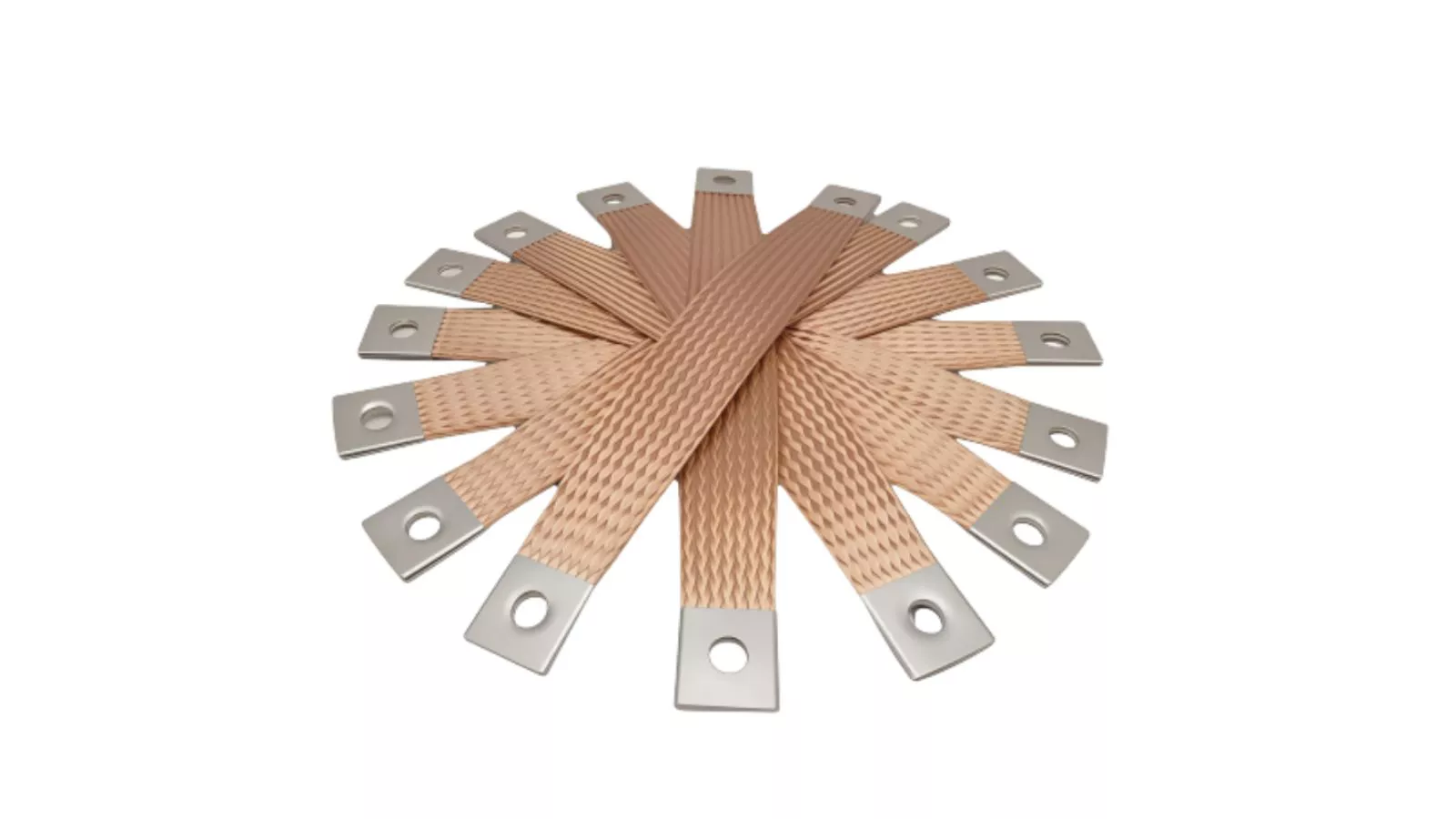
Run current through both, and the laminated busbar usually pulls ahead — but not by accident. Its flat, layered geometry is almost purpose-built for low impedance.
Here's why. In a braid, current has to hop between strands, and tiny air gaps between wires add resistance. At higher frequencies, the skin effect pushes current to the outer strands, wasting some of the copper's potential. In a laminated busbar, the flat, wide surface spreads current evenly, and the tight layer spacing keeps inductance low.
Heat behaves the same way. A laminate's broad, flat surface sheds heat efficiently — like a radiator fin. A braid's round, bundled shape holds heat closer to its core, so it runs slightly warmer under the same load.
| Metric | Flexible Copper Braid | Laminated Busbar |
|---|---|---|
| Inductance | Moderate to higher | Low |
| Skin effect at high frequency | More pronounced | Less pronounced |
| Current capacity per cross-section | Good | Excellent |
| Heat dissipation | Moderate | Efficient, radiator-like |
For a 30A grounding jumper, this gap barely matters. For a 1,000A busbar feeding a battery pack, it's the difference between a system that stays cool and one that needs extra derating.
Flip the comparison to movement, and the braid takes the win — comfortably.
Picture an EV motor bolted to a chassis. The motor shifts a few millimeters every time it accelerates, brakes, or hits a pothole. A rigid connection there would crack within months. A woven copper braid just absorbs that motion, strand by strand, cycle after cycle.
That's because a braid flexes in every direction — axially, radially, even under twisting. A laminated busbar flexes too, but mostly along one plane. Twist it repeatedly, and the layers can eventually work loose or crack at the bend point.
Example: a battery pack in an EV expands slightly as it heats up during fast charging. Engineers often route a short braided section right at the connection point, specifically to absorb that thermal movement without stressing the terminal.
So if your application involves constant vibration — motors, robotics, rail, off-road equipment — a braid isn't just the flexible choice. It's usually the only one that survives long-term.
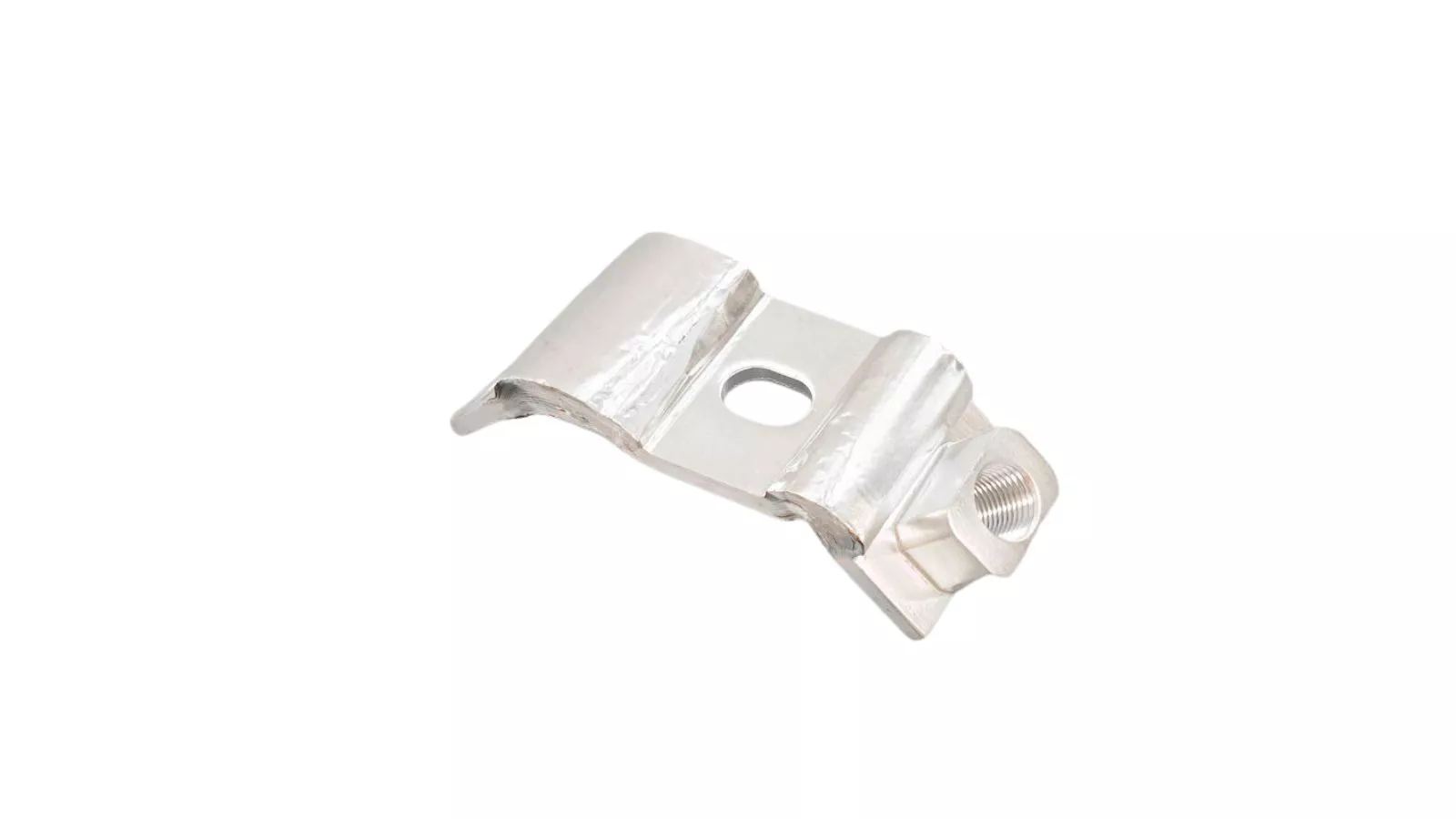
Specs matter, but real-world placement tells the story faster. Walk through a few common systems and the pattern becomes clear.
In an EV, braided connectors show up at the motor and inverter joints, where vibration is constant. In the same vehicle, laminated busbars run inside the battery pack and power electronics, where current is high and space is razor-thin.
In an energy storage cabinet, laminated busbars link battery modules stacked tightly together. In a solar inverter housed outdoors, braided grounding straps absorb the daily thermal expansion and contraction of the enclosure.
| Application | Typical Choice | Why |
|---|---|---|
| EV motors, robotics | Flexible copper braid | Constant vibration and movement |
| Battery packs, energy storage | Laminated busbar | High current, tight space |
| Grounding, bonding jumpers | Flexible copper braid | Absorbs thermal and mechanical shift |
| Switchgear, UPS systems | Laminated busbar | Low inductance, compact layout |
Some systems don't pick just one. A well-designed battery pack might use laminated busbars for the main power path, then finish with a short braided jumper wherever a connection needs to move.
Most selection debates boil down to three questions. Answer them honestly, and the choice usually picks itself.
Does the connection point move? If it vibrates, flexes, or shifts with heat, choose braid.
Is space tight and current high? If both are true at once, laminate almost always wins.
Is upfront cost the deciding factor? Braid is often cheaper to produce for smaller cross-sections.
There's a fourth question worth asking too: how often will this connection be serviced or moved during maintenance? Braided connectors tolerate repeated handling better — laminated busbars are meant to be installed once and left alone.
If your answers point in different directions — say, high current and constant vibration — that's not unusual. It usually means your design needs both, not a single winner.
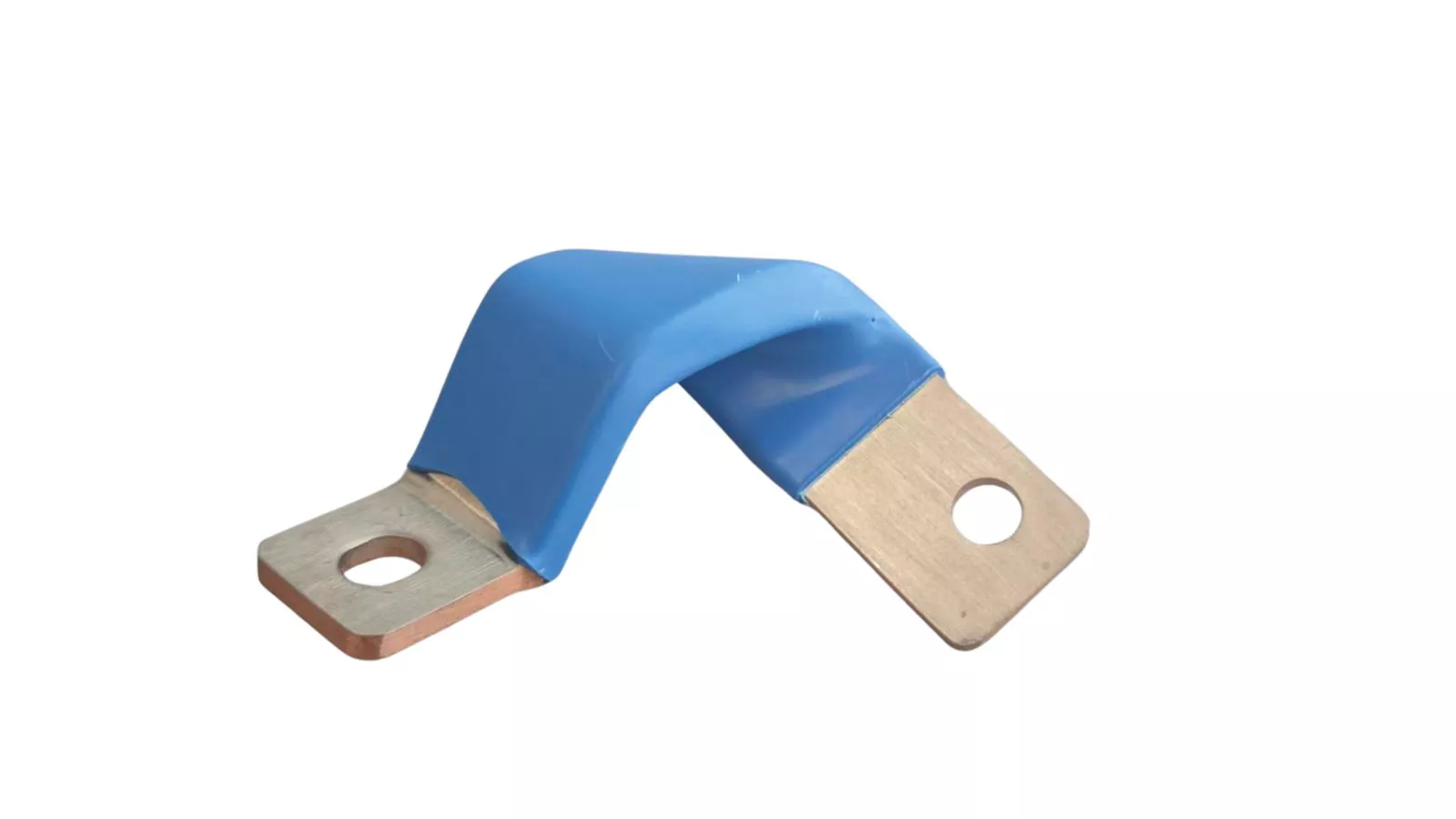
Almost nothing about these connectors ships "standard." Every project has its own current load, footprint, and terminal geometry, so both braided and laminated types are typically built to order.
On the braided side, customization usually starts with strand count and gauge, since that determines current rating and flexibility together. Terminal ends can be crimped, welded, or left lug-free for a cleaner install. Plating — tin, nickel, or silver — is chosen based on the operating environment and whether soldering is involved.
On the laminated side, layer count and thickness set the current capacity, while insulation type (polyester or epoxy) is chosen for the temperature and safety rating needed. Hole placement, bend radius, and overall length are all specified to match the exact mounting layout.
| Customizable Element | Braided Connector | Laminated Busbar |
|---|---|---|
| Sizing basis | Strand count, gauge | Layer count, thickness |
| Terminal options | Crimped, welded, lug-free | Punched holes, custom spacing |
| Plating/insulation | Tin, nickel, silver | Polyester, epoxy film |
| Length tolerance | Tight, project-specific | Tight, project-specific |
A copper to flex connector — where a rigid bar transitions into a braided section — is a common example. It needs a custom terminal shape just to join two very different structures cleanly, without creating a weak point at the joint.
A perfect spec sheet means little if the connector arrives with an inconsistent weave or a delaminated layer. Supplier reliability is where good designs either hold up or fall apart.
Start with certifications. ISO 9001 signals a controlled process. UL and RoHS matter if the product ships into regulated markets. REACH compliance matters more than ever for buyers in the EU. These aren't just paperwork — they're a shortcut for verifying quality without inspecting every batch yourself.
Next, check whether the supplier actually manufactures both constructions in-house. A shop that only does braiding will often push braid as the answer to every problem, whether or not it's the best fit. The same goes for a laminate-only supplier. A manufacturer producing both tends to give more balanced, application-first advice.
Also worth asking: How fast can they turn around a sample? Can their engineers review your drawing before production? Do they hold tooling for repeat orders, or start from scratch each time?
Those answers usually predict how the whole relationship will go — not just the first order.
It's a conductor made of many fine wires woven together, allowing it to bend and flex repeatedly without breaking.
Mainly for grounding, bonding jumpers, and connections that need to absorb vibration or movement.
Copper braid coated with a thin layer of tin, added for better corrosion resistance and easier soldering.
A conductor made of stacked, insulated copper layers, designed for high current in compact spaces.
The main types are rigid busbars, flexible laminated busbars, and flexible braided busbars, each suited to different current and flexibility needs.
Individual copper layers typically range from 0.1mm to 1mm, with total thickness depending on layer count and current rating.
A busbar acts as a shared conductor path, distributing electrical current from one source to multiple circuits or components.
Copper is generally preferred for its high conductivity, though aluminum is sometimes used to reduce weight and cost.
Neither construction is "better" on its own — it depends on whether your system needs to move or needs to run dense, high current in a tight footprint. Once you know that, the choice usually becomes clear.
At SHZHJ, we manufacture both flexible braided and laminated copper connectors, built to the current rating, terminal style, and space constraints your project actually needs. Whether you're sourcing for EV systems, energy storage, or industrial power distribution, our team can help match the right construction to your application.
If you're not sure which fits your project, send us your specs — we'll help you compare options and quote a solution that works. Visit lococontact.com to get started.
*We respect your confidentiality and all information are protected.

This article explores the key differences between silver and copper conductors, focusing on resistance, performance, and real-world applications—understanding these factors is essential for making informed decisions.

This guide explains how flexible copper busbars work, how to select the right one, and why your choice directly impacts system reliability.

In the railway and heavy equipment industry, locomotive contacts are small but critical components that make or break electrical circuits inside contactors, relays, and switches.